




What if the difference between going to bed hungry and having a warm meal came down to a short walk to a machine on the street corner? What if help didn’t require a form to fill out, a queue to stand in, or a stranger’s eyes to meet? In Dubai, that’s not a hypothetical — it’s already happening, one loaf at a time.
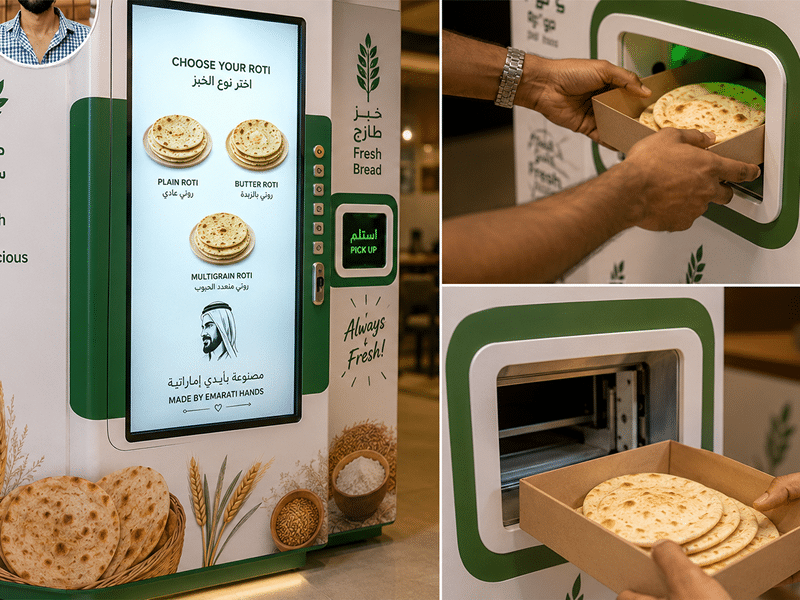
Tucked into the everyday rhythm of the city is a project called “Bread for All,” an automated kiosk system that has been quietly operating since 2022. It doesn’t make headlines the way Dubai’s skyline does, but in its own way, it says just as much about the city.
The Machine Behind the Mission
At its core, “Bread for All” is exactly what it sounds like: a smart, self-operating unit that bakes fresh bread on-site and hands it out for free, around the clock, every single day of the week. There’s no shop assistant, no fixed hours, and no waiting for a charity office to open in the morning. The kiosks don’t stop at bread either — they also dispense hot meals, meaning someone walking past at 3 a.m. with nowhere else to turn has somewhere to go.
The project is run by the Mohammed Bin Rashid Global Centre for Endowment Consultancy, and the idea driving it is refreshingly uncomplicated: nobody in the city should have to sleep on an empty stomach. Turning that idea into a machine that just… works, without red tape, is where the innovation really lies.
Dignity Built Into the Design
Here’s the part that makes this initiative stand out from a typical food bank or charity drive: it was built to protect people’s dignity first.
Anyone who has ever needed help knows that asking for it is often the hardest part. Lines, paperwork, and the fear of being recognized or judged can stop people from reaching out even when they desperately need to. “Bread for All” removes nearly all of that friction. There’s no registration, no explaining yourself to anyone, no eye contact required. You simply walk up, take what you need, and walk away — as private or as quick as you want it to be.
That single design choice — privacy over process — may be the most important feature of the whole system. It treats hunger as something to be solved, not something to be interrogated.
A Two-Way Street: Giving and Receiving
The machines aren’t just outlets for aid — they’re also collection points. Anyone who wants to support the cause can donate directly at the kiosk, meaning the same piece of street furniture that feeds someone in need also invites the wider public to contribute.
This turns the whole system into something closer to a self-sustaining loop than a one-way handout. The community feeds the machine, and the machine feeds the community — a small but clever way of keeping the initiative running without leaning entirely on government funding.
A Quiet Contrast to the City’s Glamour
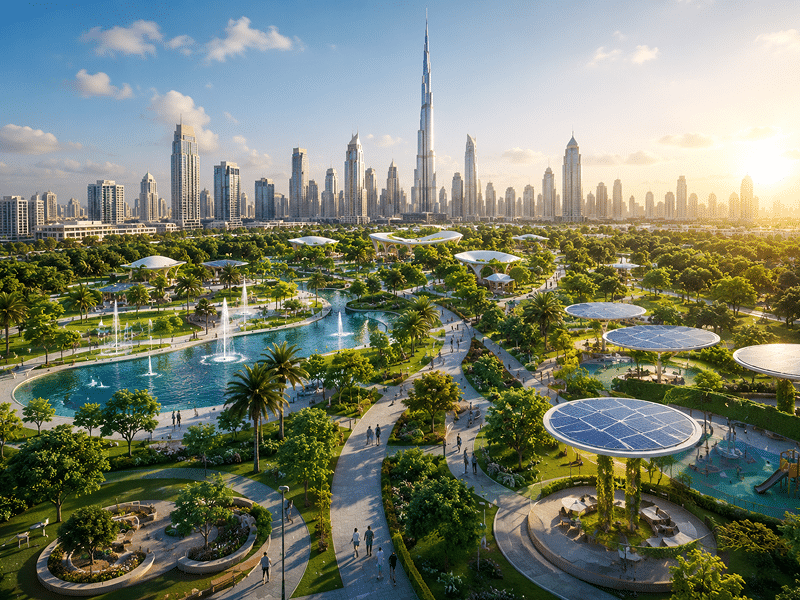
Dubai’s global image is built on superlatives — the tallest towers, the most luxurious hotels, an ever-expanding skyline of ambition. It’s easy to forget that a city built on extremes still has people living on the margins of it. “Bread for All” exists precisely for them.
While much of the city sleeps or parties through the night, these kiosks keep baking. It’s a strange and quite moving contrast: the same relentless drive for innovation that produces record-breaking architecture is, here, pointed at something as basic as making sure nobody goes hungry.
Why This Matters Beyond Dubai
No single vending machine is going to solve hunger — not in Dubai, not anywhere. But “Bread for All” is a useful case study in what happens when technology is aimed squarely at a human problem instead of a commercial one. Automated, dignified, always-on food access is a model other cities could realistically borrow, whether that’s in the Gulf region or far beyond it.
The takeaway isn’t really about the machinery. It’s about the principle underneath it: food is a right, not a favor, and helping someone shouldn’t come with a side of humiliation.
What Do You Think?
A bread machine that never closes, never asks questions, and never makes anyone feel small — is this the future of urban charity, or just one small fix in a much bigger problem? Would you like to see something like “Bread for All” rolled out in your own neighborhood, or do you think real human connection is something no machine can ever fully replace?
Drop your thoughts in the comments — we’d love to hear where you stand.
Sunita KS is a passionate Blogger, Content Writer, and Digital Marketer. She started her journey in content creation over a decade ago. She brings up-to-date information to help readers explore and enjoy everything Dubai has to offer. Sunita loves discovering hidden gems across the city and sharing tips on places to visit and things to do in Dubai.